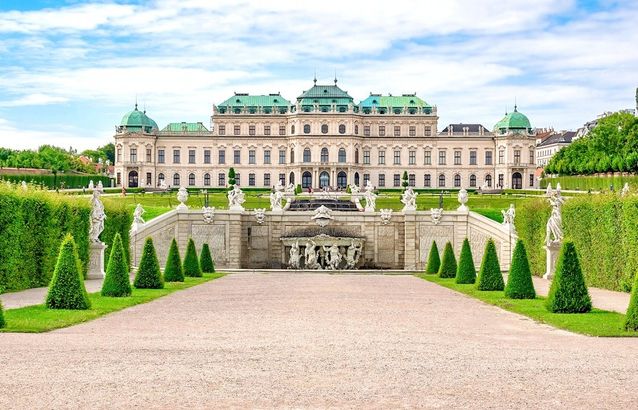
The Belvedere always shines with its beauty. This is the best work in the Baroque style by Lucas von Hildebrandt. Since the 18th century, the Belvedere has remained virtually unchanged. The Austrians periodically carry out restoration work, carefully preserving the historical appearance of the ensemble. The Austrian Gallery, known throughout the world as a repository of rare masterpieces, is also located in the palace.
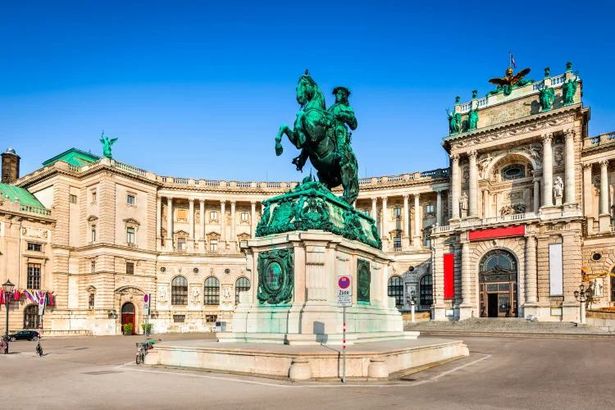
The Hofburg is the former principal imperial palace of the Habsburg dynasty in Austria. Located in the center of Vienna, it was built in the 13th century by Ottokar II of Bohemia and expanded several times afterwards. It also served as the imperial winter residence, as Schönbrunn Palace was the summer residence. Since 1946, it has been the official residence and workplace of the president of Austria.
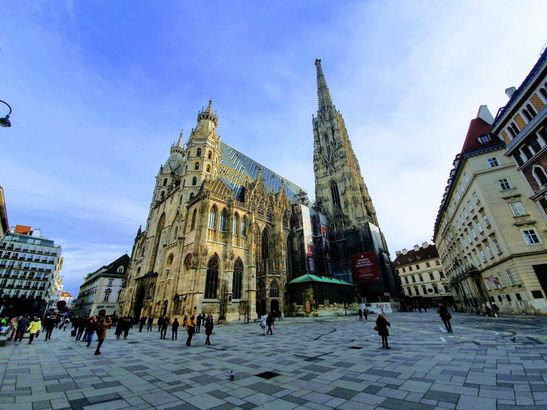
The cathedral is built in the Gothic style and stands monumentally on the main city square. For tourists, the Cathedral is interesting for its history and architectural beauty. The Austrians themselves revere the relic because of the abundance of cultural rarities stored inside.
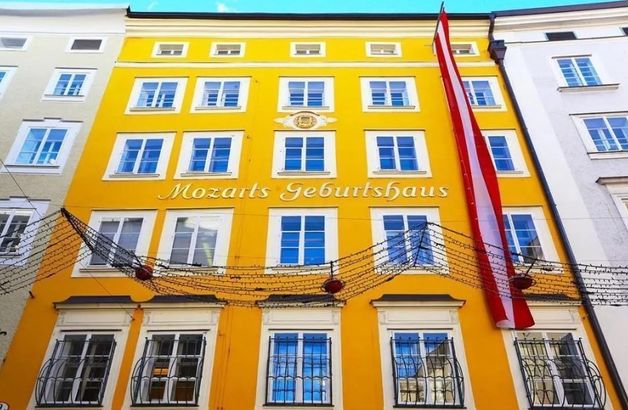
Of all the places where Mozart lived, only his apartment has been preserved in its original form. It was here that the opera "The Marriage of Figaro" was written, which is especially dear to the Austrians. The period of residence in this apartment was marked by the secular popularity of the young Mozart. Currently, it houses a Museum, occupying an area of 1000 square meters. The world of the composer is reproduced here delicately and subtly.
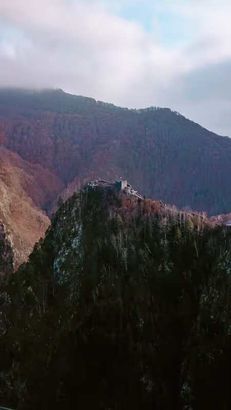
Poenari Citadel (or Poenari Castle) is one of the most well-known places in Romania, as it was home to the famous Vlad the Impaler. Vlad the Impaler was an important prince of Wallachia and is recognised as a national hero of Romania. However, he was best known for his cruelty and wickedness when it came to punishing his enemies.
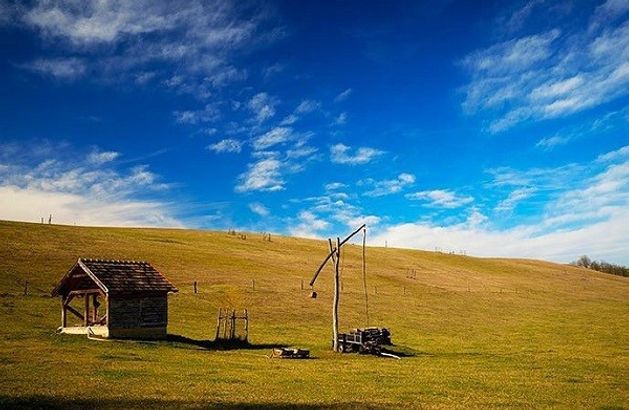
For lovers of thermal baths and generous food servings, we recommend taking a trip to the Great Plain of Hungary or Alföld. With their wide range of indoor and outdoor thermal pools, salt rooms and various mud treatments, Cserkeszőlő and Kiskunmajsa are perfect for a little R&R.
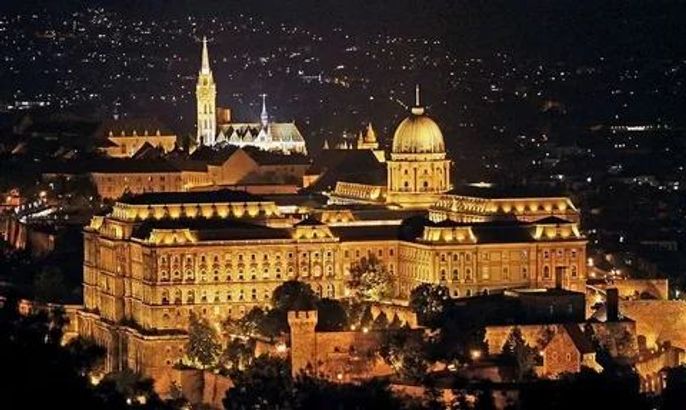
Buda Castle is an ancient residence of the rulers of Hungary in Budapest. It is one of the iconic architectural monuments of the Hungarian capital. The fortress is located on a hill on the right bank of the Danube and is included in the UNESCO World Heritage List. The oldest part of the fortress was built in the 14th century, but the main castle was rebuilt from the end of the 19th to the beginning of the 20th century.
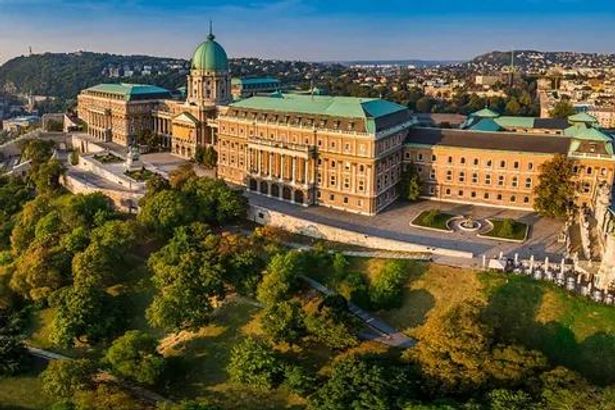
Castle Hill is a hill in the first district of Budapest, located on the right bank of the Danube River. The height of the hill is 175 meters above sea level, its length is about 1.5 kilometers, its width is 0.4. Under the hill there is a labyrinth of caves 28 kilometers long, formed by thermal springs. Castle Hill is one of the popular places to visit in Budapest.
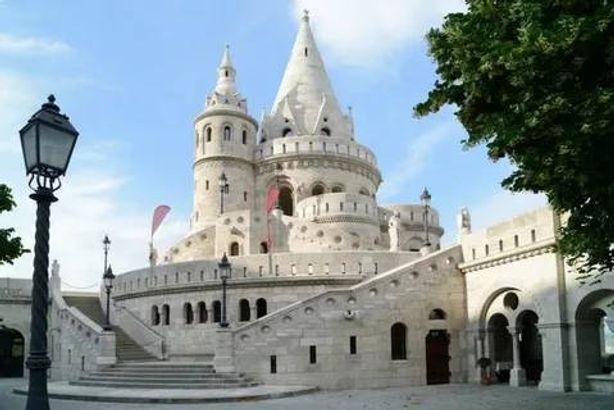
Fisherman’s Bastion is a historical monument in Budapest, located near the Buda Castle. It was built in 1895–1902 according to the design of the architect Frigys Szulek. It was built in the neo-romantic style and is recognizable due to its many balustrades, arcades, turrets, passages and viewing platforms. It is a gallery 140 meters long and 8 meters wide, which seems to embrace the temple.
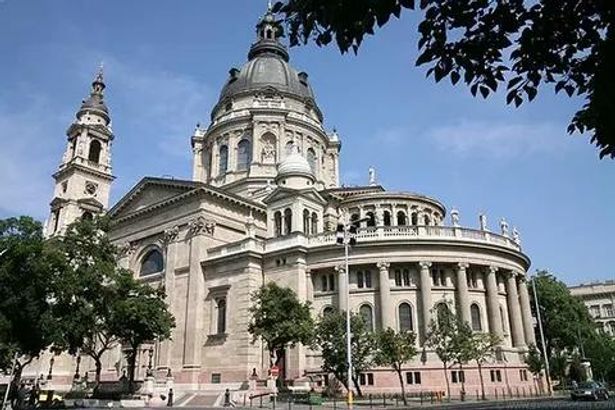
St. Stephen's Basilica is a Catholic cathedral in Budapest, the largest church in the capital of Hungary. Construction began in 1851 and was carried out according to the designs of the architect József Hild. The temple was built in the neo-Renaissance style, and is an equilateral "Greek cross" in plan. There are two tall bell towers on either side of the main façade.
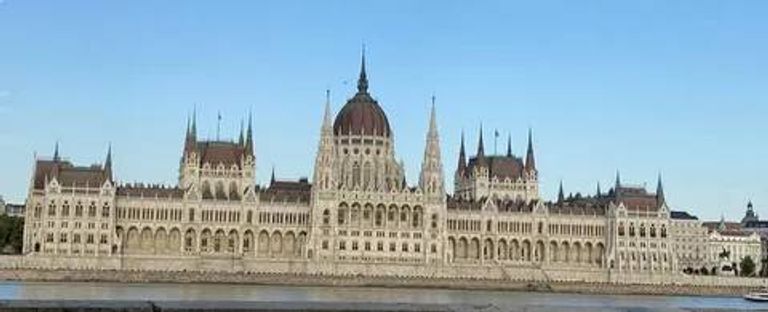
The Budapest Parliament Building is the seat of the National Assembly of Hungary, a landmark and popular tourist destination in Budapest. It was built in the neo-Gothic style by Hungarian architect Imre Steindl and opened in 1902.
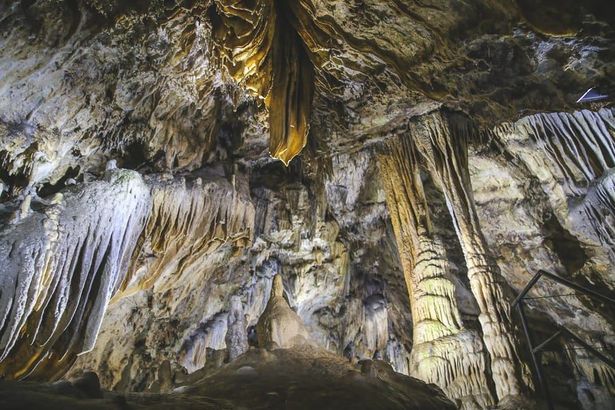
Located in the province of Namur, in the Belgian Ardennes Region, the Caves of Han Domain is home to some of Belgium’s most spectacular caves. This is a popular day trip from Brussels or other places in the country, and it’s easy to understand why. The Caves of Han feature numerous beautiful underground chambers, and some of these are huge.
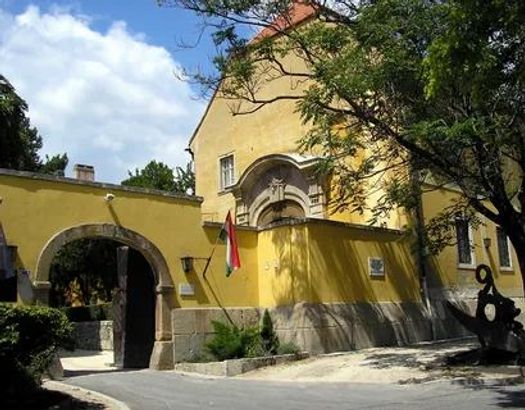
The Kiscelli Museum is a historical museum in Budapest, located in a picturesque green corner of Obuda in the Baroque castle of the same name, which was built in the 18th century for a Trinitarian monastery. For some time, the walls of Kiscelli housed barracks, and then a hospital. Currently, it is a branch of the Budapest History Museum.
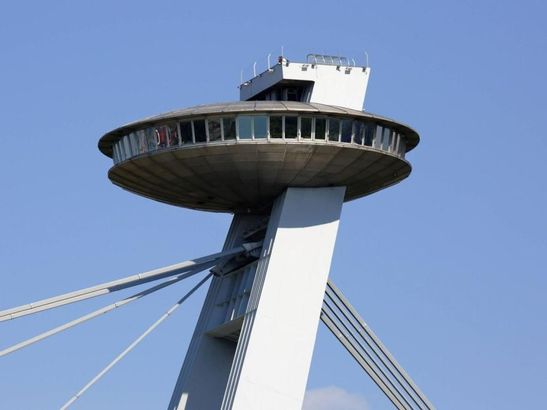
This is a unique landmark of Slovakia, because at the top of the pylon there is a structure resembling an unidentified flying object. The observation deck itself is located on the National Uprising Bridge, which is something contradictory. It does not unite the city's residents, but on the contrary, divides them. The length of the bridge is 431 m, it is suspended on only one pylon. It is at its top that the famous observation deck is located, along with a restaurant.
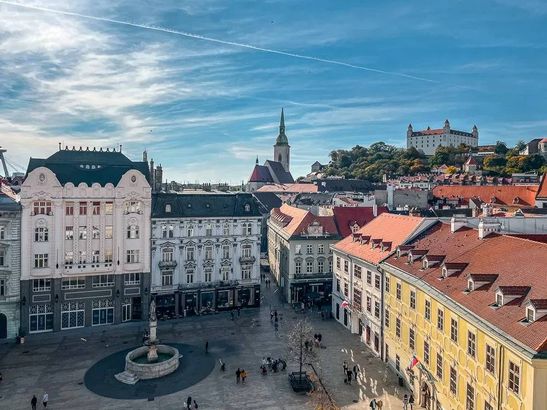
A large number of historical monuments are concentrated in this place. The streets are not without government institutions and offices. The western part of the settlement is represented by a hilly surface, there is a castle, embassies of various countries. The eastern part of the Old Town is the historical and administrative center. There are many monuments, churches and other attractions concentrated on the territory.
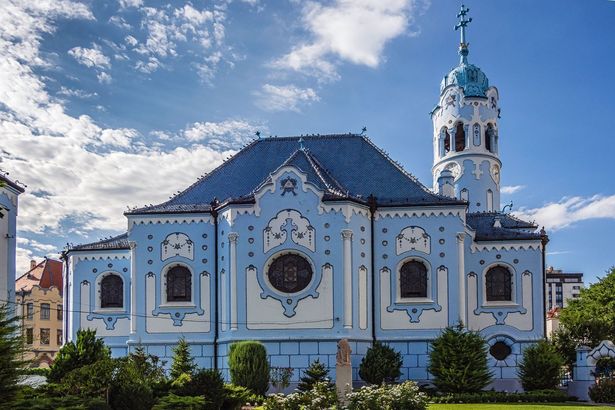
The capital of Slovakia is rich in interesting places, one of the most significant is the blue church. At one time it was built in the Art Nouveau style, by the way, the sky shades prevail inside, the main decoration of the interior is the Italian mosaic. The design did not do without oriental motifs, it is known that according to the architect's idea, the existing decorative elements were to symbolize the conquests in the east of the country.
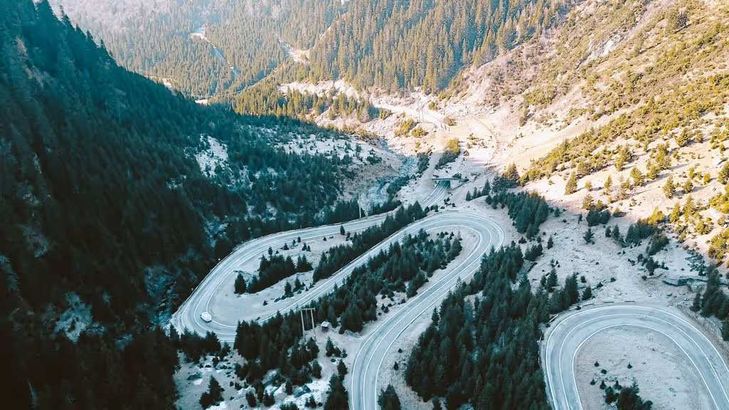
The highway was built in the early 1970s as a strategic route to cross the Fagara Mountains if Romania were to be invaded by the USSR. Transfăgărășan highway is over 150km in length, and its highest point is at 2,042m so as you can imagine the views are spectacular.
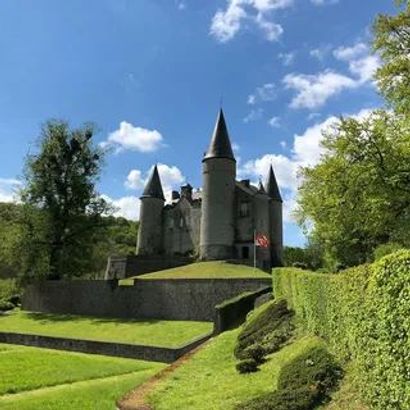
Often dubbed “Sleeping Beauty’s Castle“, Vêves Castle looks as if it’s coming straight out of a fairytale, and this is definitely one of the most magical landmarks in Belgium. The Castle of Vêves was originally built as a fortress in the 15th century, but a castle has been standing on these grounds since the 7th century.
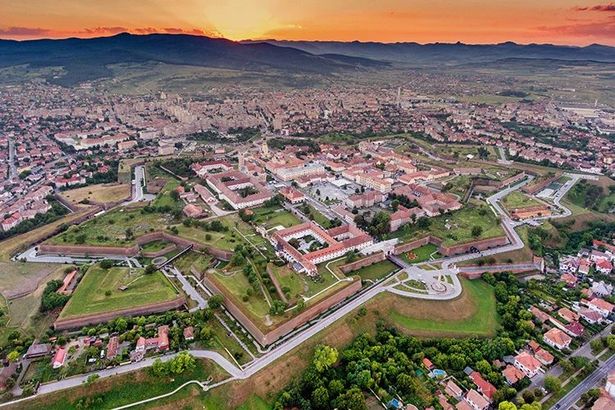
The Alba Iulia Fortress is a massive 18th century fortification which forms the heart of the Romanian city of Alba Iulia. Alba Iulia itself is one of the oldest cities in Romania, with a history stretching far back into antiquity. During Roman times it was an important regional centre known as Apulum.

The UK has a host of microclimates and spectacular gardens to visit. The Eden Project is home to the largest rainforest in captivity and is a great learning experience for all ages.