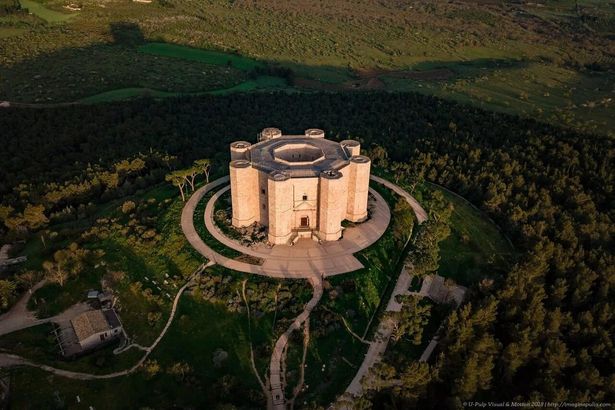
Castel del Monte is a 13th-century Gothic-Renaissance castle located in Apulia, southern Italy. Commissioned by Emperor Frederick II, it is renowned for its unique octagonal design, combining elements of medieval military architecture with classical symbolism and mathematical precision. A UNESCO World Heritage Site, the castle remains an architectural masterpiece and one of Italy’s most mysterious and iconic landmarks.

Butrint is an ancient settlement founded in the Antiquity period: in the 7th-6th centuries BC, a Greek colony appeared here. The city flourished for over a thousand years, and managed to survive the raids of the Vandals, Goths, and Slavic tribes. In the 15th century, the settlement was abandoned. In the 1920s, archaeological excavations began on its site, during which well-preserved structures from different periods were discovered. Now there is a museum-reserve in Butrint.

The Philopappos Hill always gets overlooked as the best city view in Athens, but in my opinion, it gave a much better view of the Acropolis than Mount Lycabettus did. As you ascend the hill, stop off at the Prison of Socrates. This is where the renowned philosopher was said to have been held. There’s a little information board outside that explains it.

One standout gem within the Acropolis complex is the Odeon of Herodes Atticus. The Odeon of Herodes Atticus is built into Acropolis Hill. Built in honour of Herodes Atticus’ wife, this stunning structure was built to host theatrical performances and musical concerts. It’s also one of the historical places in Athens, Greece that’s still in use today!

As you traverse the majestic entrance to the Acropolis, you’ll encounter the awe-inspiring Temple of Athena Nike. This temple, dedicated to the goddess of victory, is a testament to the artistic and architectural brilliance of the ancient Athenians and stands overlooking the gateway into the Acropolis. It still features graceful columns and intricate friezes. You can see them as you approach the impressive Propylaea entrance.

One of the integral parts of the Acropolis is The Parthenon, which stands as one of the most iconic Athens historical sites in the world. This ancient masterpiece is a testament to the ingenuity and architectural prowess of the ancient Greeks. Dedicated to the goddess Athena, the Parthenon’s majestic columns and intricate sculptures showcase the artistic brilliance of the era.
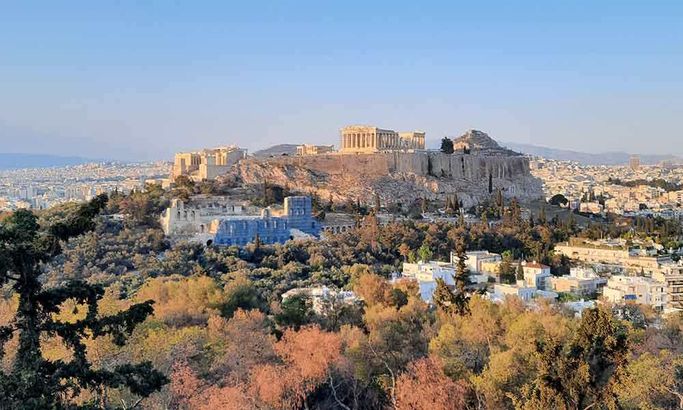
The Acropolis, also known as Acropolis Hill, is an absolute gem among historical sites in Athens, Greece. It dates back more than 3000 years ago. Perched high above the city, it is home to a plethora of fascinating ancient Athens attractions. As you explore this ancient wonder, prepare to be captivated by its magnificent columns and intricate architectural details.

Another building situated within the magnificent Acropolis is the Erechtheion. This remarkable structure, nestled alongside other notable buildings, is a true highlight of the ancient Athenian world. With its graceful Ionic columns and the iconic Caryatids standing tall, the Erechtheion exudes an aura of elegance and mystique.

This monumental gateway, located near the Temple of Olympian Zeus, was erected in honour of the Roman Emperor Hadrian during the 2nd century AD. As you approach the arch, you’ll be able to see the intricate architectural details. Its Corinthian columns and elaborate friezes adorn its facade and show scenes from Greek mythology.
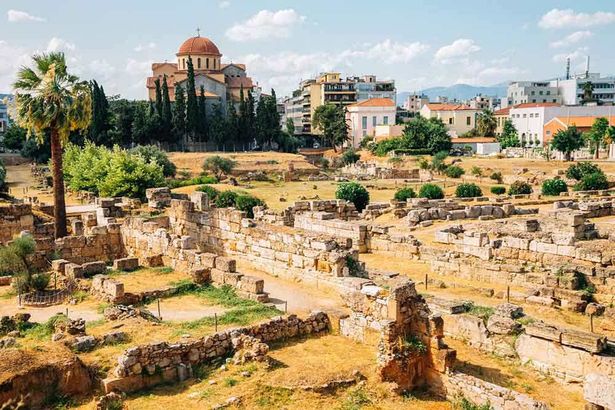
This archaeological site holds a deep significance as the final resting place of Athenian citizens throughout the centuries. It’s a sprawling site that shows the footprints of various buildings and plazas. Explore the intricate gravestones, stelae, and burial monuments that line the pathways, each telling a unique story of the individuals who once walked these streets thousands of years ago.

One of the most important historical landmarks in Athens, Greece can be found at Hadrian’s Library. Built by the Roman Emperor Hadrian in the 2nd century AD, this grand structure served as a public library and cultural centre. This building would once have housed the treasures of ancient knowledge. The library once contained countless scrolls and books, offering a wealth of knowledge at the time.

This iconic stadium is one of the most famous places in Greece, Athens. Also known as the Kallimarmaro Stadium, it holds a significant place in Olympic history as it hosted the first modern Olympic Games in 1896. Take a walk through the enormous marble structure, which was reconstructed on the site of an ancient stadium from the 4th century BC.
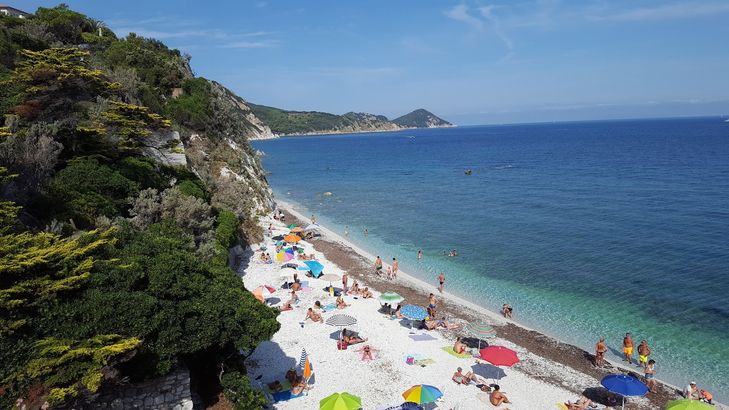
Spiaggia di Capo Bianco is a stunning white-sand beach located on the island of Elba, part of the Tuscan Archipelago in Italy. Known for its crystal-clear turquoise waters and dramatic coastal cliffs, it offers a peaceful and picturesque setting for sunbathing, swimming, and snorkeling. The beach is surrounded by lush Mediterranean vegetation, making it one of the most beautiful natural spots on the island.

Syntagma Square, located in the heart of Athens, stands as a vibrant hub and a symbolic centre of the modern city. This bustling square is not only a meeting point for locals and tourists but also it’s one of the most important places in Athens. Its name, “Syntagma,” meaning “Constitution” in Greek, reflects its historical role as a gathering place for demonstrations and political rallies.

The Tomb of the Unknown Soldier, situated in front of the Greek Parliament in Syntagma Square, stands as a solemn tribute to the fallen heroes who sacrificed their lives in service to Greece. This is one of the most symbolic monuments in Athens. It serves as a constant reminder of the price of freedom. The tomb is guarded by the distinguished Evzones, the Presidential Guards.
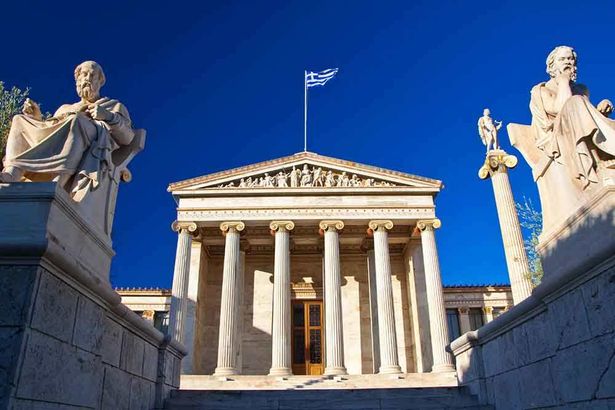
This revered institution was founded by the renowned philosopher Plato. It served as a centre of intellectual inquiry and philosophical discourse during ancient times. Here you can walk in the footsteps of some of the greatest minds from history. Very little remains of the original structures, but today’s building is a testament to Plato’s Academy.

This beacon that looms over Athens stands at 277 metres tall. It offers incredible views and is the best vantage point to look at the sprawling cityscape below. You can get up there in two ways: if you’re feeling energetic then hike up or opt for a convenient funicular ride to reach the top. Whichever way you go, you’ll be rewarded with a magnificent vista that stretches from the Acropolis to the Saronic Gulf.

The National Archaeological Museum is one of the most famous buildings in Athens. It has a significant collection of ancient Greek art and artefacts. Inside, you’ll find stunning sculptures, intricate pottery, and exquisite jewellery on display. From the iconic Mask of Agamemnon to the captivating Antikythera Mechanism, the museum’s vast collection showcases the ingenuity and craftsmanship of the ancient Greeks.
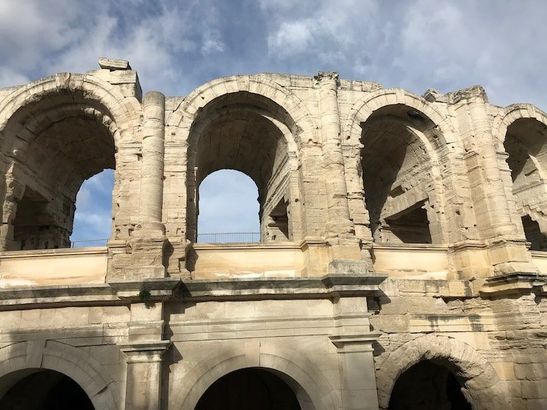
The Arles Amphitheater, built in the first century CE, was where gladiator fights and chariot races were held, providing a regular dose of bloody sports to some 20,000 spectators. In later years, after the Romans had gone, buildings sprouted within the arena, turning it into a veritable village, replete with housing and churches.

The exact depth of the karst spring is unknown, but it is more than 45 meters (divers were unable to go lower due to the strong pressure of the water gushing from underground). Tourists come here to admire the unusual spring: the water in its center is bright blue, and at the edges it is light blue. The picturesque surroundings of the Blue Eye are also worth attention: it is surrounded by dense oak forests.