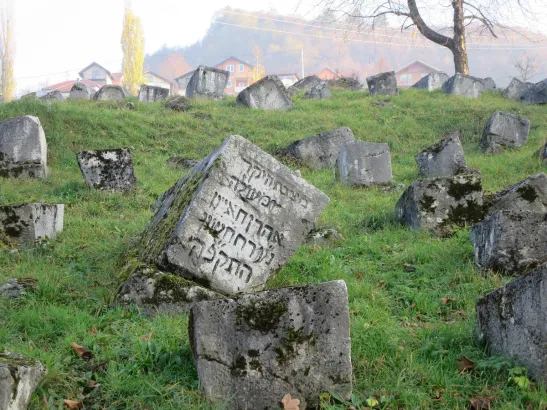
This historic cemetery was inaccessible for several years due to dozens of land mines. английский (определен автоматически)
английский
русский
немецкий
русский
английский
украинский
The graveyard is particularly notable for the unique shape of its tombstones, which bear the influence of the monumental, medieval Bosnian stećci in their block-like shapes and decorative motifs.
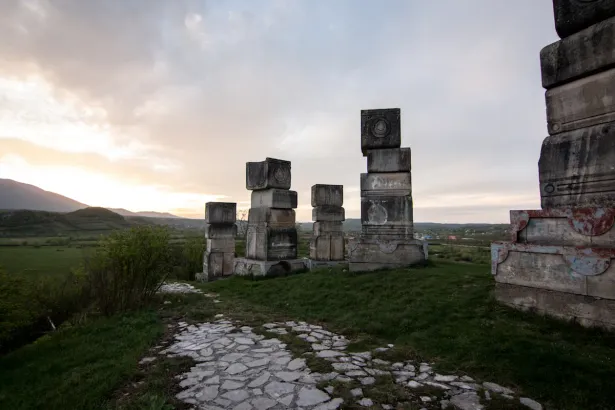
The Garavice Memorial Park to the Victims of Fascist Terror was designed by renowned architect Bogdan Bogdanović, and completed in 1981. It consists of 15 stone columns placed around the crest of Garavice Hill, roughly 15 feet in height and each formed from a series of carved stone blocks. Engravings on the blocks show curious patterns and abstract designs, reminiscent of local folk art.
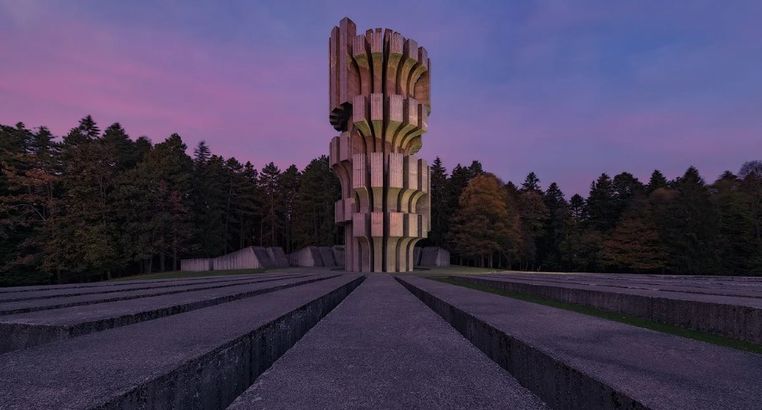
To honor tragic battle, the Kozara Memorial monument was erected in 1972. Designed by Dušan Džamonja, and built atop Mrakovica Mountain on a plateau surrounded by dense forest, the segmented tower stands 33 meters high. To honor the fallen dead, the names of 9921 of the Yugoslav partisans who gave their life for freedom during the World War II offensive are inscribed on a bronze memorial wall near the tower.
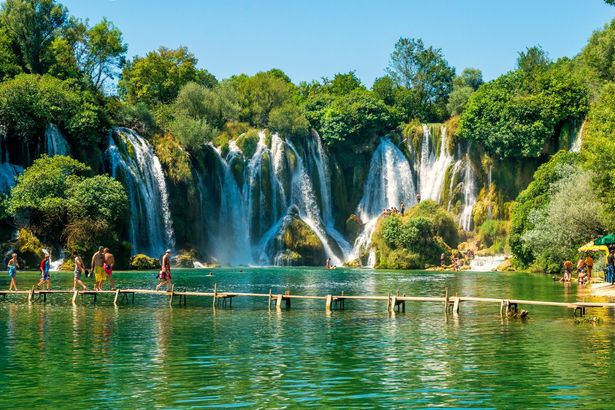
Spectacular Kravice Waterfall (Vodopad Kravica) in Bosnia and Herzegovina are one of Europe’s best-kept natural secrets. Plummeting over 98-foot (30-meter) soft tufa cliffs on the Trebizat River southwest of Mostar, the waterfalls have sliced out a natural amphitheater spanning nearly 400 feet (120 meters) as the river splits into more than a dozen separate waterfalls cascading into the lake below.
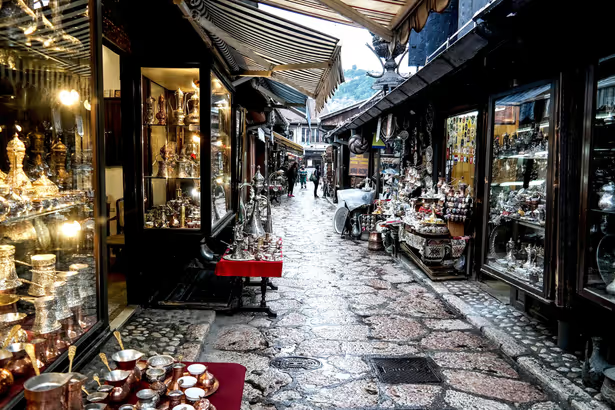
Bascarsija Bazaar, the Ottoman-era marketplace of Sarajevo, is a lively hub of activity in the city’s old town, Stari Grad. Crowded streets lined with traditional and souvenir shops, a broad selection of cultural landmarks, and the ornate Sebilj fountain help make this one of Sarajevo’s most popular attractions, no matter your interests.
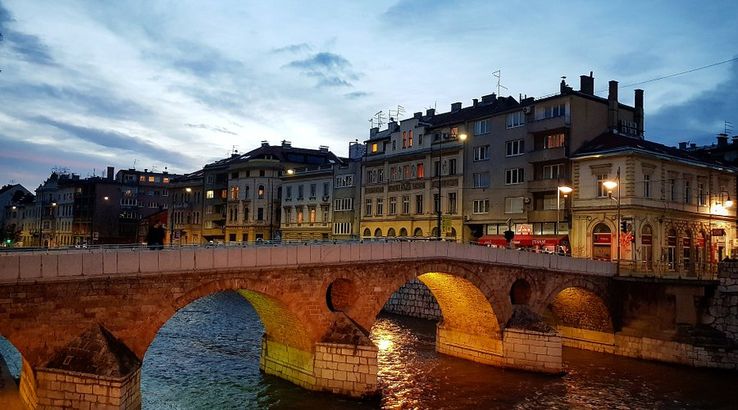
Crossing the Miljacka River and leading into the old town of Sarajevo, the Latin Bridge is an elegant fixture of Sarajevo’s scenic riverfront. But what draws so many visitors to this Ottoman landmark is its part in world history as the site where Archduke Franz Ferdinand of Austria was assassinated, instigating the events of World War I.