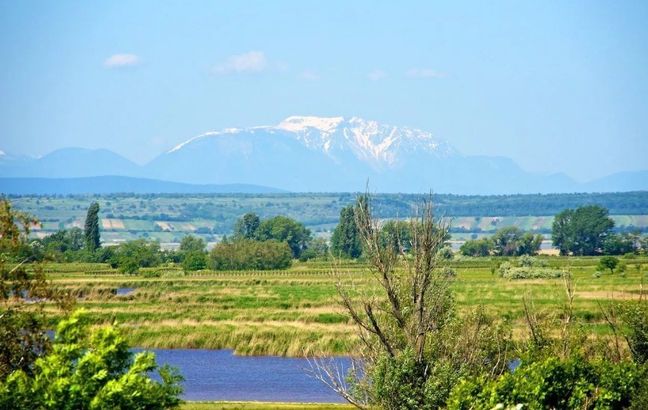
Neusiedlersee-Seewinkel is famous for its diverse flora and fauna, which is under the special protection of the national park. Many plant species can be found here, including the most common grape vines, oaks, maples, hornbeam and beech forests. The park also has a salt marsh, wetlands and steppe ecosystems. As for the animal world, many species of birds can be found in the park, such as ducks, herons, swans and many others. You can also see bats, hedgehogs, badgers, foxes and deer.
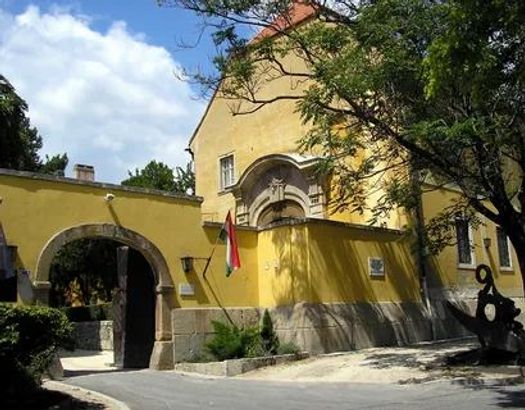
The Kiscelli Museum is a historical museum in Budapest, located in a picturesque green corner of Obuda in the Baroque castle of the same name, which was built in the 18th century for a Trinitarian monastery. For some time, the walls of Kiscelli housed barracks, and then a hospital. Currently, it is a branch of the Budapest History Museum.
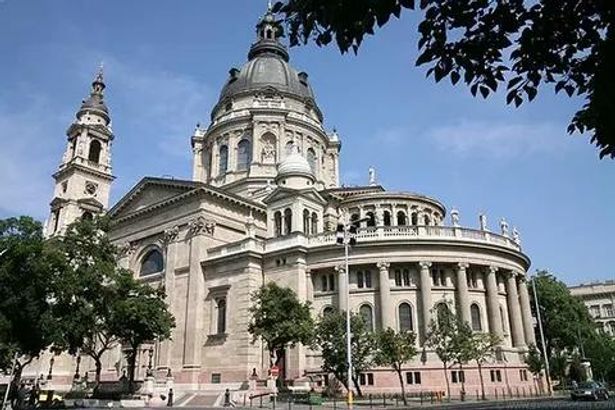
St. Stephen's Basilica is a Catholic cathedral in Budapest, the largest church in the capital of Hungary. Construction began in 1851 and was carried out according to the designs of the architect József Hild. The temple was built in the neo-Renaissance style, and is an equilateral "Greek cross" in plan. There are two tall bell towers on either side of the main façade.
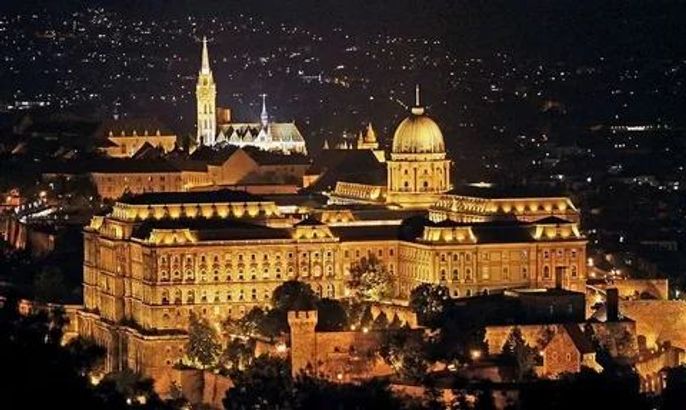
Buda Castle is an ancient residence of the rulers of Hungary in Budapest. It is one of the iconic architectural monuments of the Hungarian capital. The fortress is located on a hill on the right bank of the Danube and is included in the UNESCO World Heritage List. The oldest part of the fortress was built in the 14th century, but the main castle was rebuilt from the end of the 19th to the beginning of the 20th century.
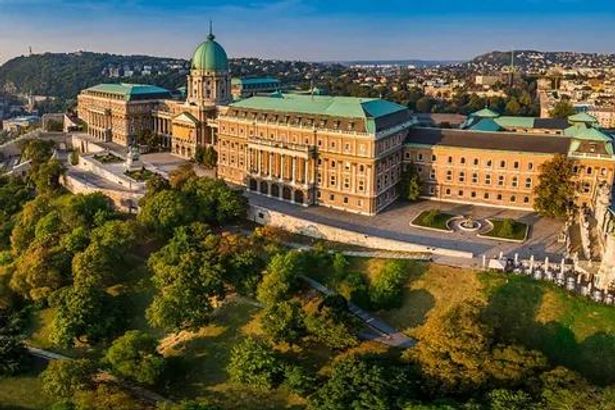
Castle Hill is a hill in the first district of Budapest, located on the right bank of the Danube River. The height of the hill is 175 meters above sea level, its length is about 1.5 kilometers, its width is 0.4. Under the hill there is a labyrinth of caves 28 kilometers long, formed by thermal springs. Castle Hill is one of the popular places to visit in Budapest.
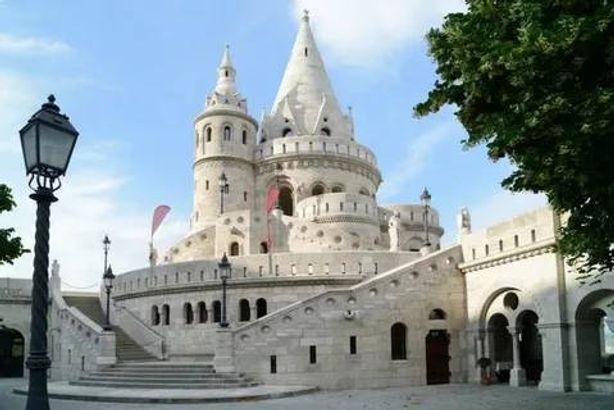
Fisherman’s Bastion is a historical monument in Budapest, located near the Buda Castle. It was built in 1895–1902 according to the design of the architect Frigys Szulek. It was built in the neo-romantic style and is recognizable due to its many balustrades, arcades, turrets, passages and viewing platforms. It is a gallery 140 meters long and 8 meters wide, which seems to embrace the temple.
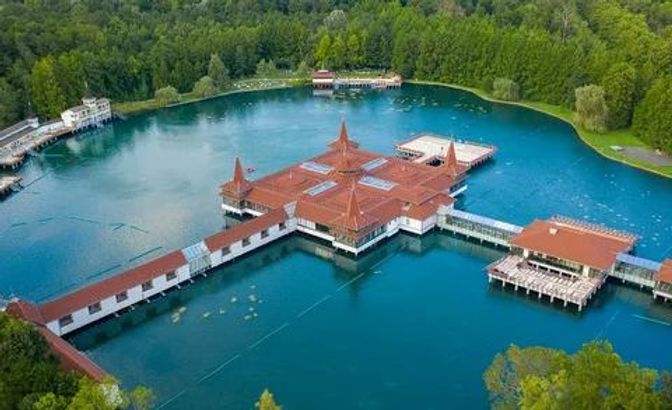
Hévízi-tó is a thermal lake in western Hungary. It is located in the spa town of Heviz, near the western end of Lake Balaton, five kilometers from the town of Keszthely. The water in the lake is completely renewed within 48 hours. Balneotherapy in the lake is indicated for arthritis of various etiologies.
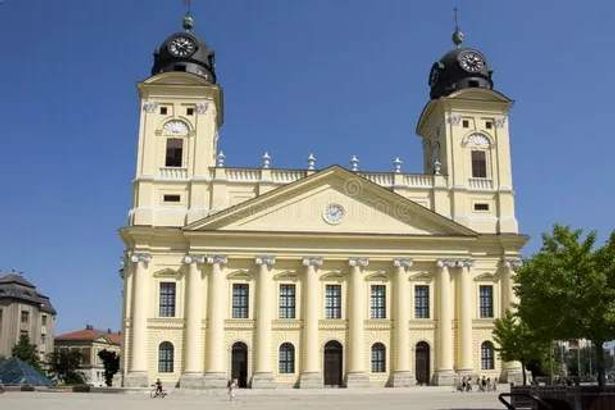
Great Church — Reformed, or Great Church in Debrecen. Built between 1805 and 1824 in the neoclassical style. It is the largest Protestant church in Hungary, its area is 1500 m². It has the largest bell among Protestant churches in Hungary. In the western tower is the Rakoczi bell weighing 4.6 tons.

Lake Tisza is the largest artificial lake in Hungary, located on the southeastern edge of Heves County. The lake was created in 1973 as part of a flood control project on the Tisza River. Tourists can enjoy various activities on Lake Tisza, including swimming, boating, biking, observing flora and fauna, fishing, hiking and excursions.
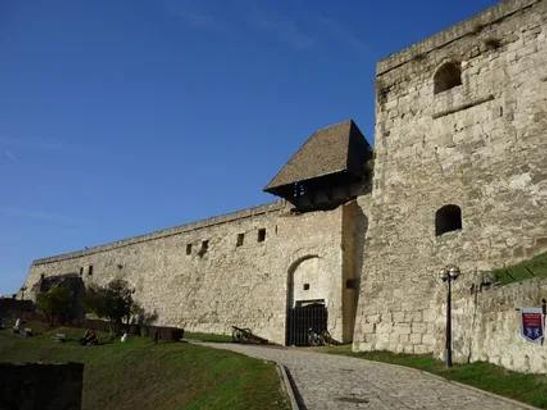
Eger Castle is a medieval fortress in the city of Eger, famous for its heroic defense against the Turks in 1552. Situated in the historical center of Eger on the Castle Hill, it is the city's main landmark. The building of the bishop's palace houses the István Dobó Museum and an art gallery. The fortress's bastions and underground casemates are open to tourists.
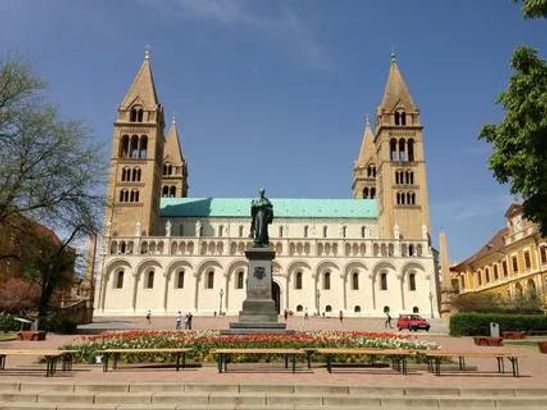
Pécs Cathedral is a Roman Catholic cathedral in the city of Pécs. The foundations of the cathedral date back to the Roman period, around the 4th century. In 1882–1891, in honor of the millennium of the conquest of the homeland on the Danube, the cathedral was decorated with a classical main façade with pointed arches. In the mid-20th century, sculptures of the twelve apostles by Antal Károly were installed on the southern pediment of the cathedral.
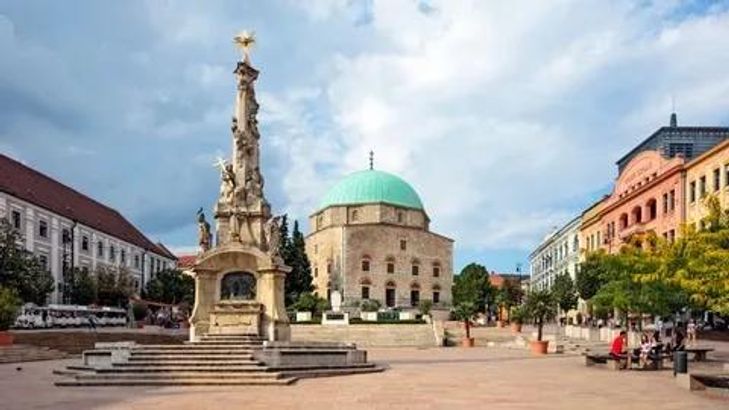
Széchenyi Square is the main square in the historical centre of Pécs. In the Middle Ages, the square served as the city's market square, with a town hall and a parish church. Before it was named after Széchenyi in 1864, the square had several other names, including Frum, Városi Piaç, and Feter.
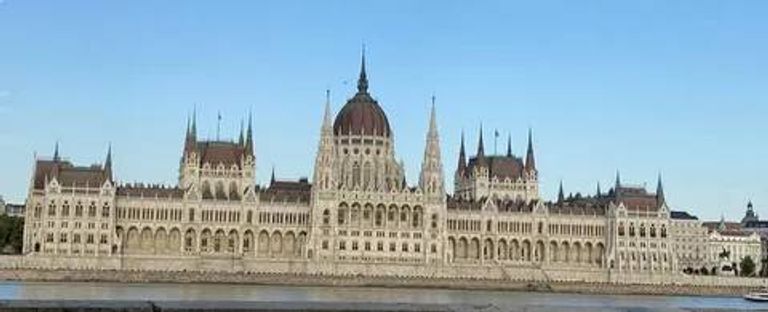
The Budapest Parliament Building is the seat of the National Assembly of Hungary, a landmark and popular tourist destination in Budapest. It was built in the neo-Gothic style by Hungarian architect Imre Steindl and opened in 1902.
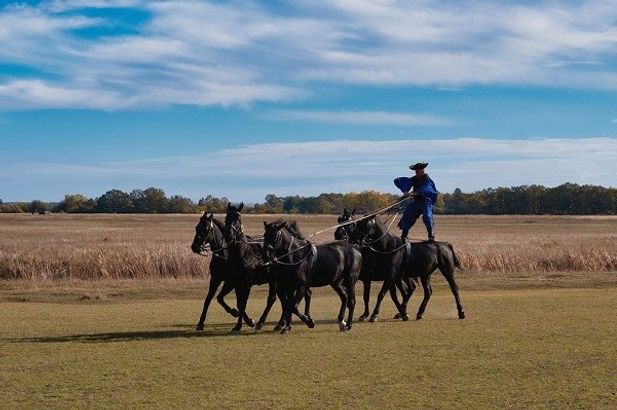
This national park is home to a unique landscape, unlike much you’ve probably seen in Central Europe. This area is primarily home to grasslands, swamps, pastures, and floodplains. In the late 1990s, it was deemed a UNESCO World Heritage Site due to the area's importance in Hungarian culture and wildlife.
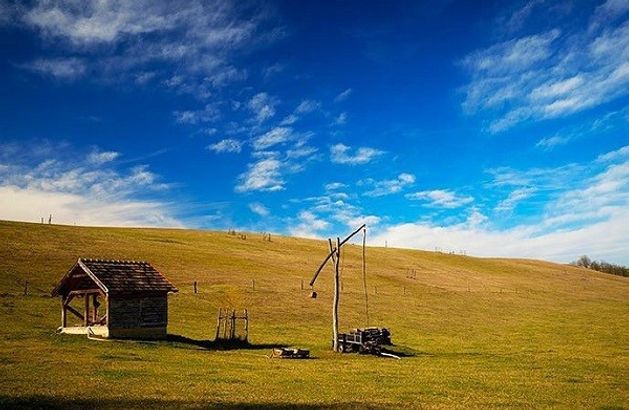
For lovers of thermal baths and generous food servings, we recommend taking a trip to the Great Plain of Hungary or Alföld. With their wide range of indoor and outdoor thermal pools, salt rooms and various mud treatments, Cserkeszőlő and Kiskunmajsa are perfect for a little R&R.
That's all