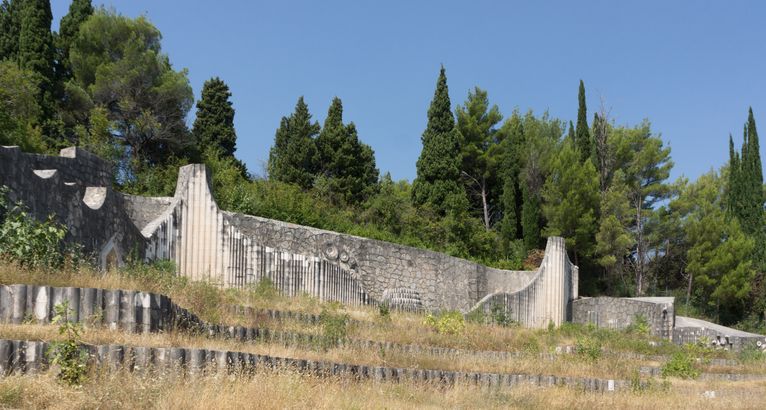
This place was created in honor of 560 Yugoslav partisans of Mostar who died during World War II. The Partisan Memorial Cemetery has a unique and eerie atmosphere. Unfortunately, the cemetery is now heavily damaged and abandoned. Despite this, it is worth taking a look at the socialist architecture of the 20th century.
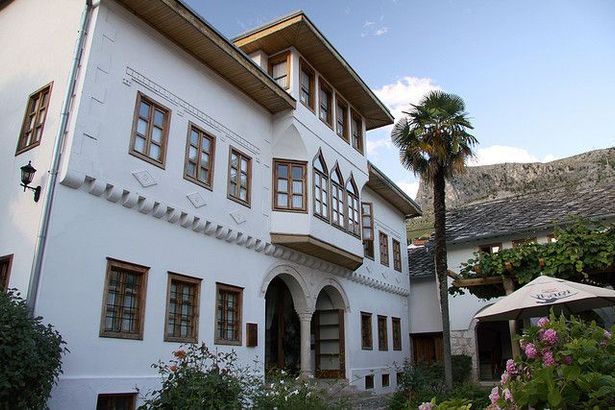
The Muslibegovic House is a national monument, museum, and hotel all rolled into one. This Bosnian-Ottoman style residential complex was built in the 18th century and features two courtyards with lush, secluded gardens. Fascinating artifacts and stunning examples of Ottoman calligraphy are displayed throughout the house. It is one of the most charming buildings in the city, and a great place to stay while in Mostar.
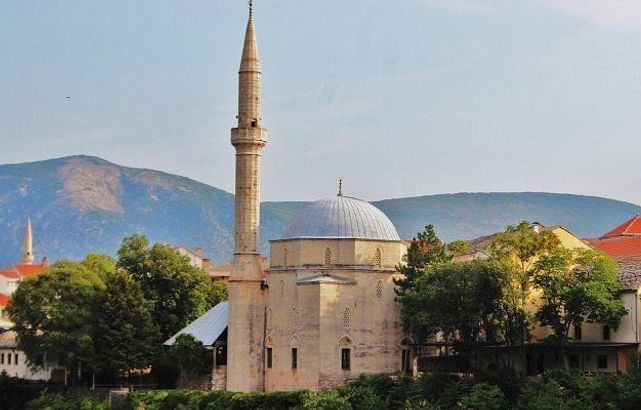
This is a wonderful example of Islamic Ottoman architecture. The mosque was designed in Istanbul and built in 1618. Its dome is painted with beautiful botanical motifs, and the colorful stained glass windows shine brightly throughout the day. Today, the mosque operates as a museum rather than a traditional place of worship, although you can still see people praying here. You can climb its minaret for a spectacular view of the Old Bridge.
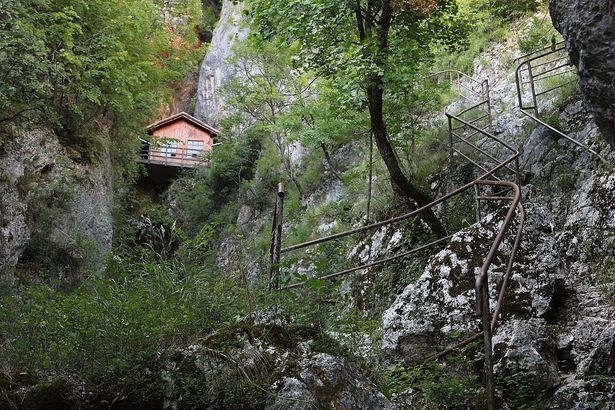
This is a cave located near the town of Drvar. During World War II, it was used as a shelter. There are very interesting and informative stories associated with this place. Since 1944, the cave has become a museum. And if you are interested in the best sights of the state, do not leave this object without attention.
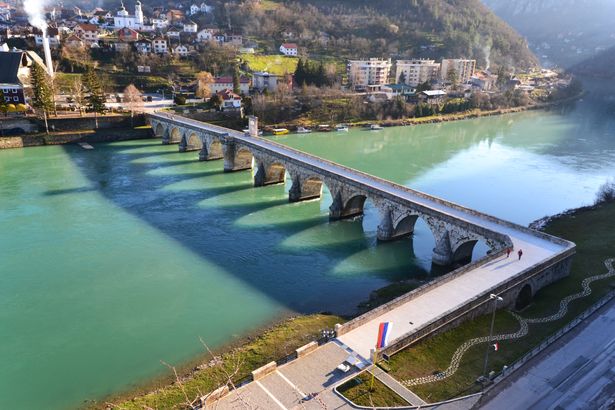
The Mehmed Paša Sokolović Bridge of Višegrad across the Drina River in the east of Bosnia and Herzegovina was built at the end of the 16th century by the court architect Mimar Koca Sinan on the orders of Grand Vizier Mehmed Paša Sokolović. Characteristic of the apogee of Ottoman monumental architecture and civil engineering, the bridge has 11 masonry arches with spans of 11 m to 15 m, and an access ramp at right angles with four arches on the left bank of the river.
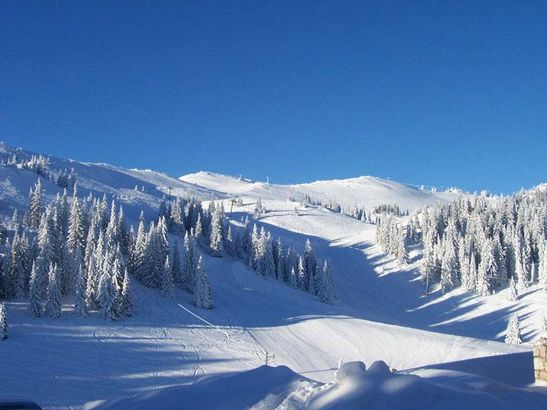
A popular ski resort. From October to May, the mountain slopes are under a meter of snow. That is why a large number of hotels in Bosnia and Herzegovina are concentrated here, offering comfortable accommodation to tourists.
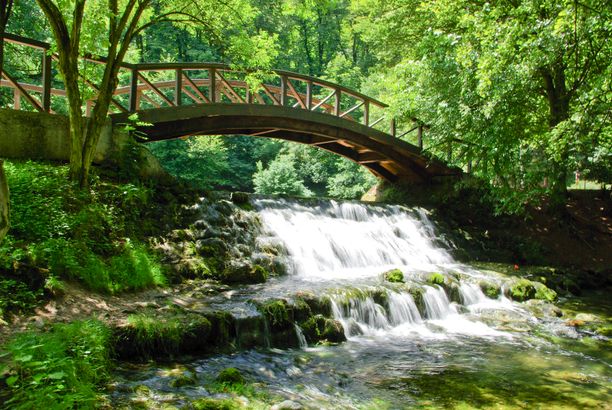
Vrelo Bosne is a public park with a system of numerous springs of the River Bosna at the foothills of Mount Igman. Vrelo Bosne is one of the country's popular natural landmarks. Vrelo Bosne Park hosts many bird species, most of which are mountain and forest birds.
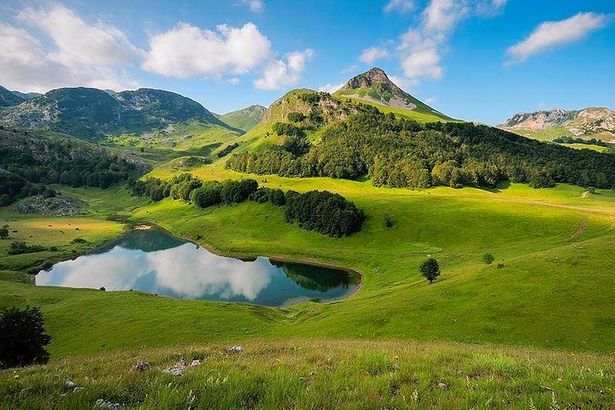
Sutjeska National Park rightfully bears the epithet as a “jewel of Republic of Srpska”. It is the biggest and oldest national park in Republic of Srpska and Bosnia and Herzegovina, covers the area of 16,052.34 hectares, of which more then 66% is covered with forest, meadows and pastures. Park extends over an mountain area at junction of borders of Bosnia and Herzegovina and Montenegro, and it is bounded with rivers Piva, Drina and Neretva and mountains Bioč, Vučevo, Maglić, Volujak, Lebršnik and
The Neretva, also known as Narenta, is one of the largest rivers of the eastern part of the Adriatic basin. Four hydroelectric power plants with large dams (higher than 15 metres) provide flood protection, electricity and water storage. The Neretva is recognized for its natural environment and diverse landscapes.
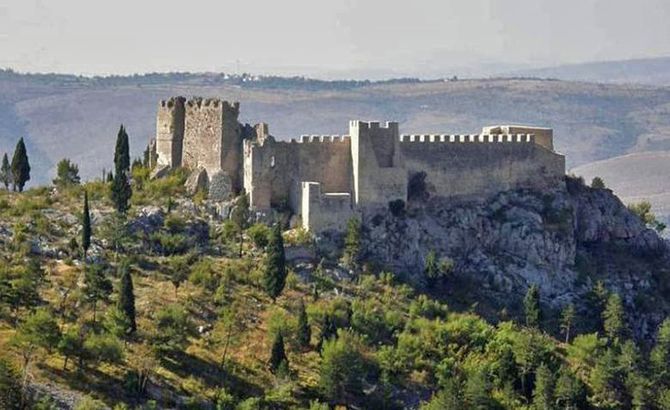
Blagaj Fortress or Old Town of Blagaj, locally known as Stjepan-grad , or Stipan-grad, in classical times Bona, is a town-fortress complex near the town of Blagaj, Bosnia and Herzegovina. The old Blagaj Fort was built on a high, inaccessible karst hill, at an elevation of 310 metres above sea level and 266 metres above the source of the river Buna.
Known as “the lungs of Sarajevo,” Trebević is the closest mountain that is reachable via the cable car from the heart of Stari Grad (Old Town), from the neighborhood of Bistrik.
Walking from the cable summit station (which will soon see the reconstruction of the once-popular restaurant, Vidikovac), either on the road or along the marked mountain paths, will lead you in many different directions where various activities await you.
Bijela tabija is certainly one of the most impressive and most valuable buildings of the architectural heritage of this area. The dominant position of the White Bastion in relation to the natural amphitheater of the historic city center, and the view that stretches along the Miljacka River all the way to modern residential areas in western Sarajevo, make a specific, almost completely natural, choreography of nature and human creativity.
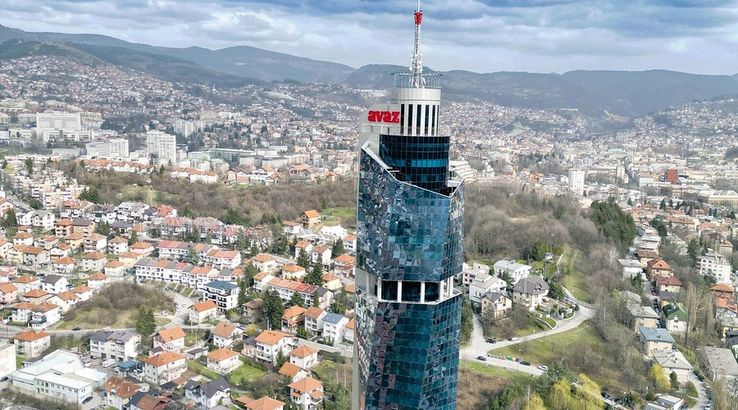
You can see the city from above from the observation deck of the Avaz Twist business center. It is located on the 36th floor of the tower, and a high-speed elevator takes tourists up. On the floor below, there is a cafe with panoramic windows, which also offer excellent panoramic views of Sarajevo.
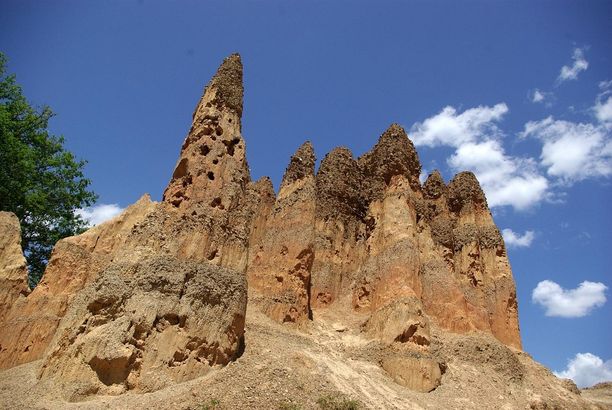
This unique geomorphologic phenomenon has been created for many years. By erosion of the soil and under the influence of aggressive friction of frosts, summer heat, rain and strong winds, figures of interesting shapes were created. Their shape and composition are reminiscent of the Pyramids in Colorado (USA), Dolomites (Italy), the Valcea region in Romania, or the pyramids in Devil's Town (Serbia).
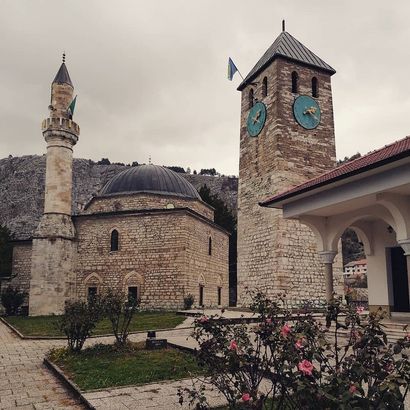
The Hajji Ahmed the Ducat Minter's Mosque is one of the most easily recognizable architectural symbols of Livno, Bosnia and Herzegovina. Built in 1574, it is situated on a hill overlooking old town of livno, the river Bistrica and the spring Duman in the upper section of the old town of Livno. The mosque complex consists of compact main building of the mosque under a dome and uncharacteristically short minaret, with a clock tower which was erected some 100 years later.
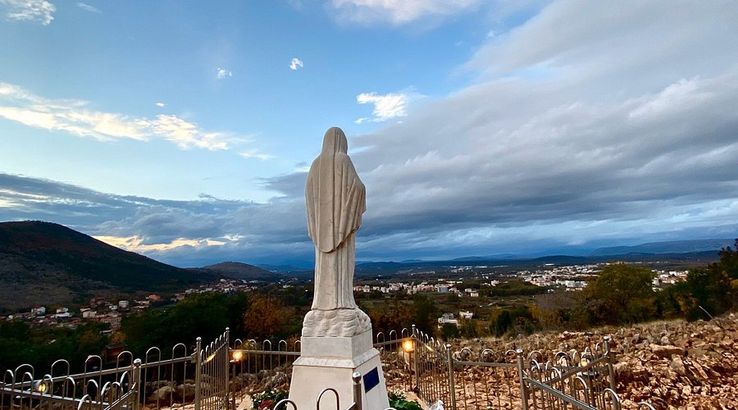
This is a pilgrimage to the hill where Theotokos appeared to the children. It is a place of worship and requires respect. The approach is quite difficult and dangerous because it is a climb of about 500m. between mite and slippery rocks, it needs sports shoes and a lot of care because a fall into the rocks is sure injury. At the top of the hill there is the statue of the Virgin Mary and a large Statue with the Crucified Jesus Christ.
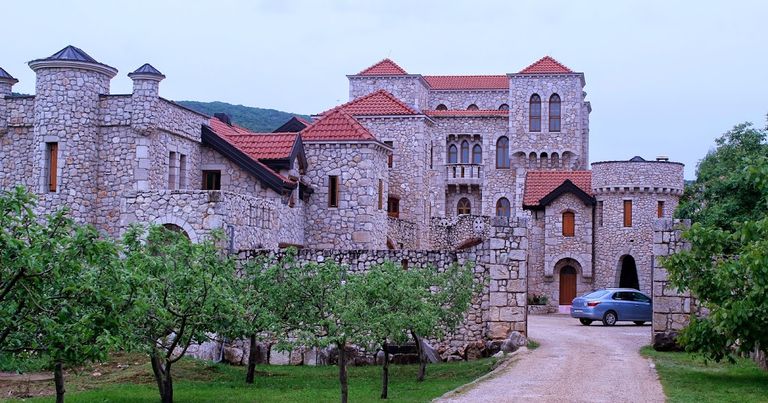
In 1999, Nancy and Patrick Latta began to build a castle in Medjugorje, to be used as a retreat place for priests, nuns, seminarians, and religious. Patrick was a very successful businessman in Vancouver, B.C., Canada. He and his wife Nancy enjoyed a lavish life style, but God was missing from their lives.
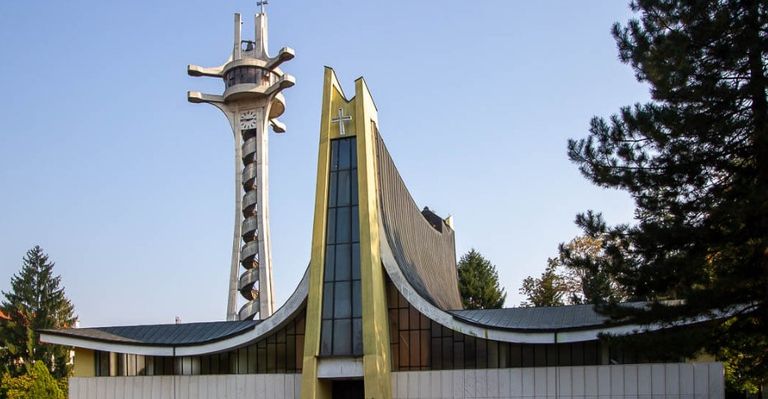
The Cathedral of Saint Bonaventure in Banja Luka is one of four Roman Catholic cathedrals in Bosnia and Herzegovina. It is the seat of the Banja Luka Bishopric currently led by Bishop Franjo Komarica.
The cathedral was built in honor of Saint Bonaventure, a Franciscan theologian from the Middle Ages. It was constructed by Alfred Pichler in the 1970s after the original had been damaged in an earthquake.
The Vijećnice building is located in the center of the city in an architectural complex with a park, the "Posavina" hotel building, and the Zemaljske bank office building. The overall composition of the building is designed according to the principle of strict symmetry with a central, prominent ridge and two smaller corner ridges.