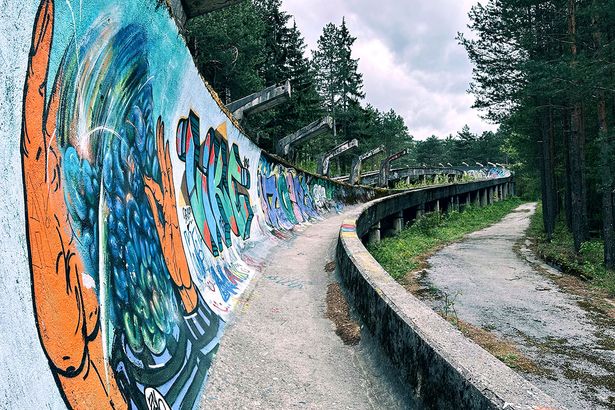
Graffiti on exposed concrete replaces the sheen of ice that once covered the now defunct Sarajevo Olympic Bobsleigh and Luge Track. This abandoned track from the 1984 Winter Olympics sits among the forest on Trebevic mountain outside the city, waiting for visitors to walk or bike along its course. Fans of urban exploration or nature hikes may enjoy exploring this now neglected site.
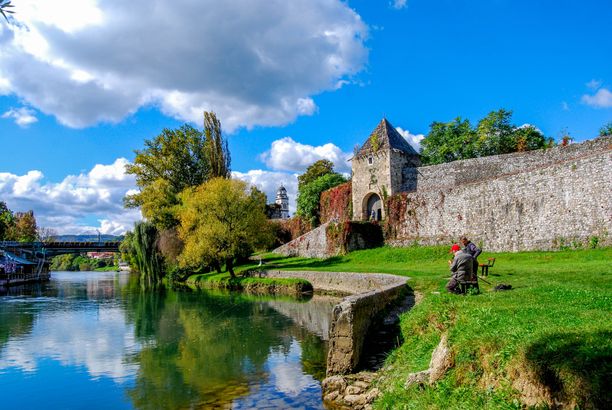
The Kastel Fortress is a fortress located in Banja Luka, Bosnia and Herzegovina. The fortress is medieval but is situated on the site of previous fortifications going back to Roman and even pre-Roman times. It was captured by the Ottoman Empire in 1527. The fortress is relatively well-preserved, and is one of Banja Luka's main attractions, situated on the left bank of the Vrbas river in the very center of town
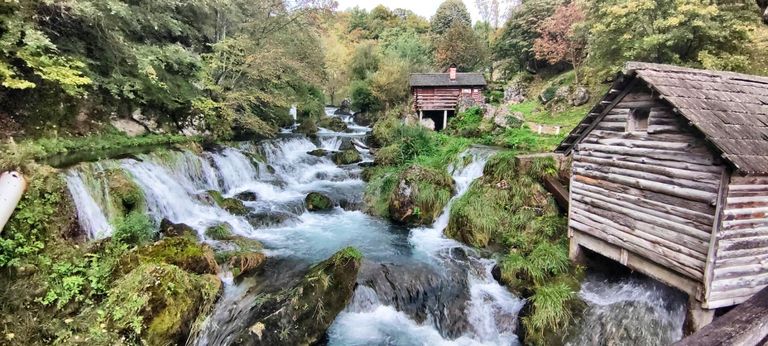
Krupa Waterfalls, located near the city of Banja Luka in Bosnia and Herzegovina, are a hidden gem waiting to be discovered by nature lovers and adventure seekers. This stunning natural wonder is nestled in the lush greenery of the Krupa River canyon, offering visitors a peaceful escape from the hustle and bustle of everyday life.
This new museum was opened in July 2016 and is the work of a group of survivors/victims as well as young researchers of the war crimes committed during the war in Bosnia between 1992 and 1995/96. It started out as mainly a collection of photos, but since then lots of original artefacts have been added to the museum's collection
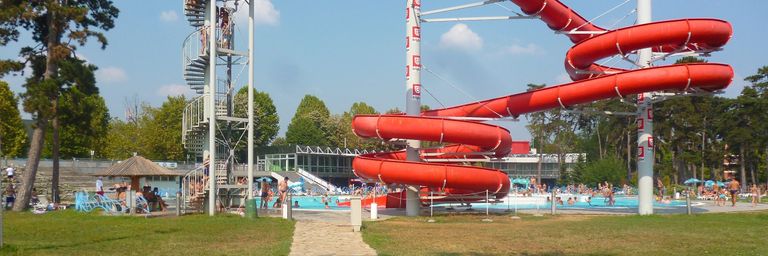
Aquapark "Akuana" is located on the alley of St. Sava within walking distance from the center of Banja Luka. The area of the park is 38,000 square meters. There are three swimming pools with a total area of 1,500 square meters.
Aqua Park "Sunčana vrela", the largest aqua park in the Balkans opened in mid-July 2017, is part of the adrenaline content of the City of Sunca complex and, together with Dino Park, occupies an area of 8 hectares. The aqua park with a capacity of 2000 visitors per day is an ideal place for a full-day adventure and vacation for the whole family.
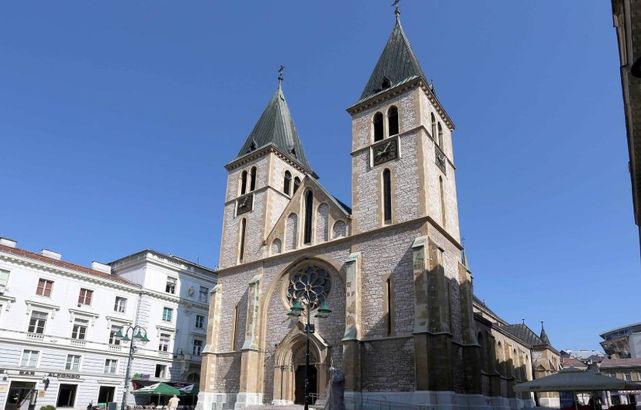
Even if you can't get inside, the cathedral is impressively beautiful from the outside.
Walk to the end of Sarajevo's main avenue and you'll find the Eternal Flame monument. Situated at the intersection of two streets, the monument symbolizes the liberation of Sarajevo from Nazi occupation.
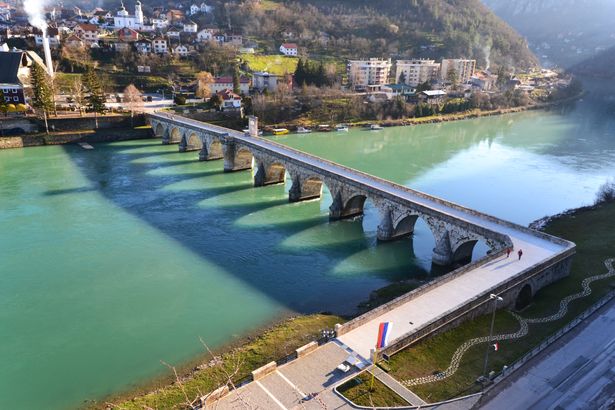
The Mehmed Paša Sokolović Bridge of Višegrad across the Drina River in the east of Bosnia and Herzegovina was built at the end of the 16th century by the court architect Mimar Koca Sinan on the orders of Grand Vizier Mehmed Paša Sokolović. Characteristic of the apogee of Ottoman monumental architecture and civil engineering, the bridge has 11 masonry arches with spans of 11 m to 15 m, and an access ramp at right angles with four arches on the left bank of the river.
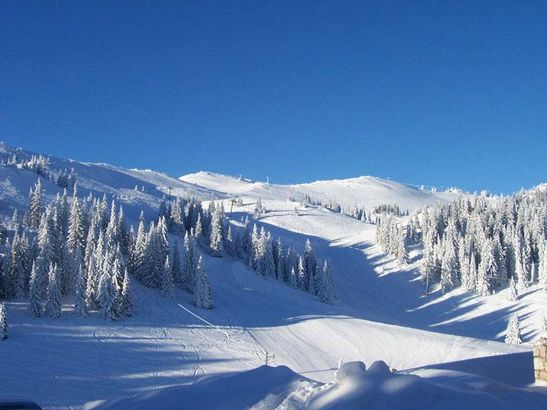
A popular ski resort. From October to May, the mountain slopes are under a meter of snow. That is why a large number of hotels in Bosnia and Herzegovina are concentrated here, offering comfortable accommodation to tourists.
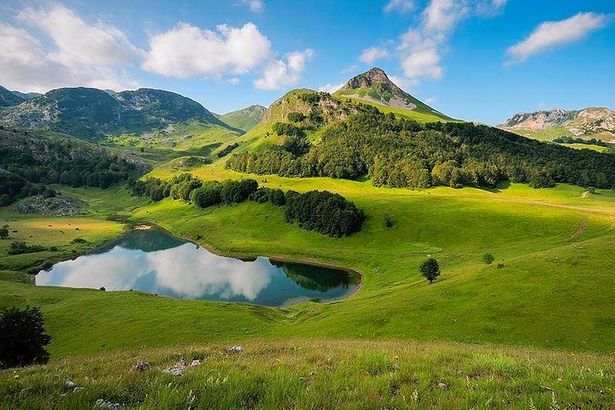
Sutjeska National Park rightfully bears the epithet as a “jewel of Republic of Srpska”. It is the biggest and oldest national park in Republic of Srpska and Bosnia and Herzegovina, covers the area of 16,052.34 hectares, of which more then 66% is covered with forest, meadows and pastures. Park extends over an mountain area at junction of borders of Bosnia and Herzegovina and Montenegro, and it is bounded with rivers Piva, Drina and Neretva and mountains Bioč, Vučevo, Maglić, Volujak, Lebršnik and
Bijela tabija is certainly one of the most impressive and most valuable buildings of the architectural heritage of this area. The dominant position of the White Bastion in relation to the natural amphitheater of the historic city center, and the view that stretches along the Miljacka River all the way to modern residential areas in western Sarajevo, make a specific, almost completely natural, choreography of nature and human creativity.
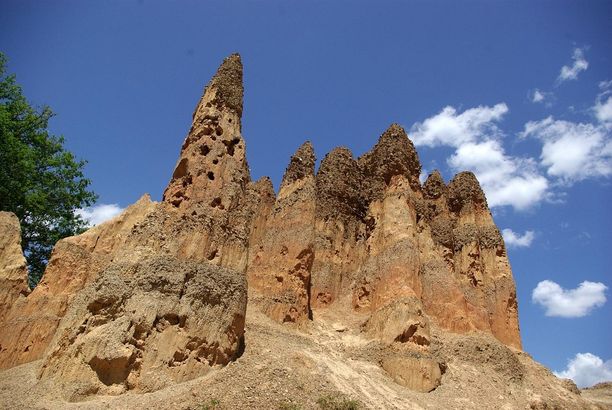
This unique geomorphologic phenomenon has been created for many years. By erosion of the soil and under the influence of aggressive friction of frosts, summer heat, rain and strong winds, figures of interesting shapes were created. Their shape and composition are reminiscent of the Pyramids in Colorado (USA), Dolomites (Italy), the Valcea region in Romania, or the pyramids in Devil's Town (Serbia).
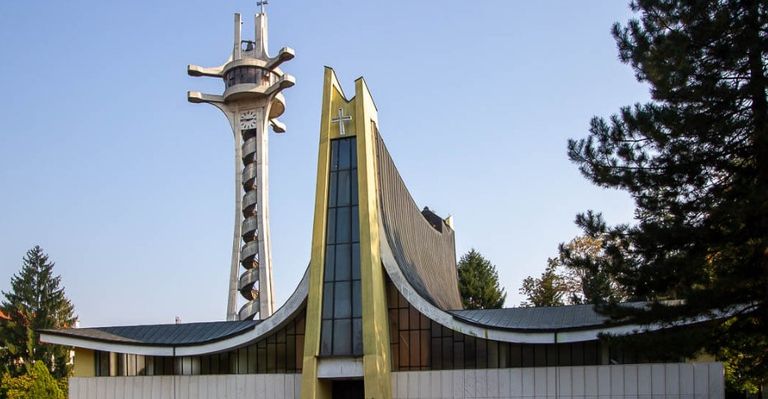
The Cathedral of Saint Bonaventure in Banja Luka is one of four Roman Catholic cathedrals in Bosnia and Herzegovina. It is the seat of the Banja Luka Bishopric currently led by Bishop Franjo Komarica.
The cathedral was built in honor of Saint Bonaventure, a Franciscan theologian from the Middle Ages. It was constructed by Alfred Pichler in the 1970s after the original had been damaged in an earthquake.
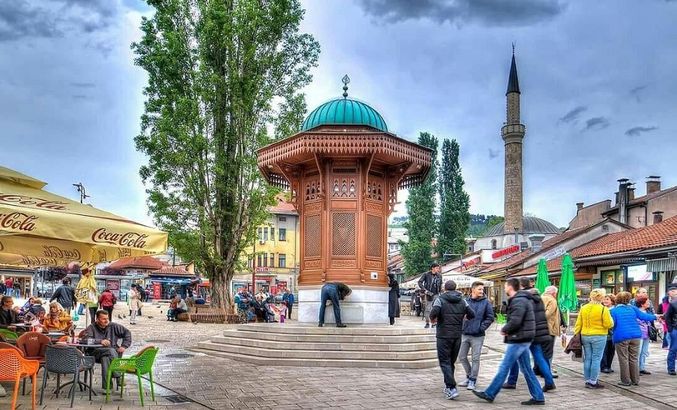
The Sebilj drinking fountain was built in 1891 on the site of a kiosk with drinking water that burned down in 1852 and was built by order of the Sultan's viceroy in Bosnia, Mehmed Pasha Kukavica. Today, Sebilj is one of the calling cards of Sarajevo.
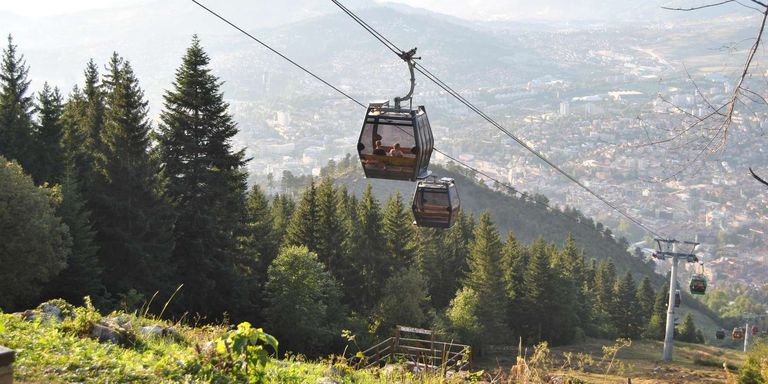
This cable car leads to Mount Trebevic. The observation deck offers unique views of the city. The funicular takes tourists to a point located at an altitude of 1,160 meters. In addition to the observation deck, you can find a cafe, ruins of an old observatory, a fortress, etc. at the top. And this is not to mention the natural attractions.
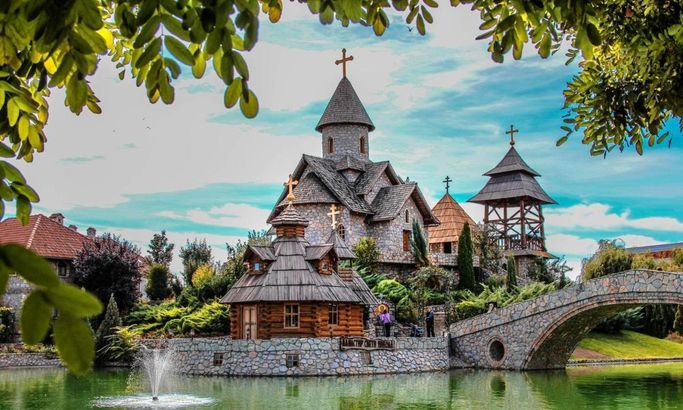
Stanišići is an ethno village near Bijeljina in Republika Srpska. The owner of the complex is Borislav Stanišić, a local entrepreneur. Entrance is free for visitors. The complex was built in March 2003. In its beginnings, it consisted of one pond, a tavern and a brook, but it expanded over time and now it contains another pond, two mills, and restaurants with local cuisine prepared in the traditional fireplace. The ethno village is still expanding, by building new objects.
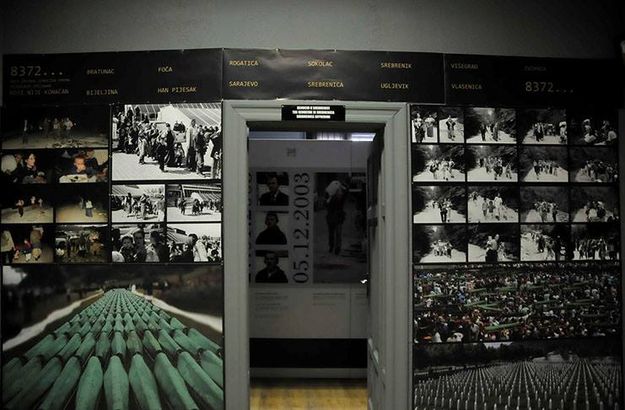
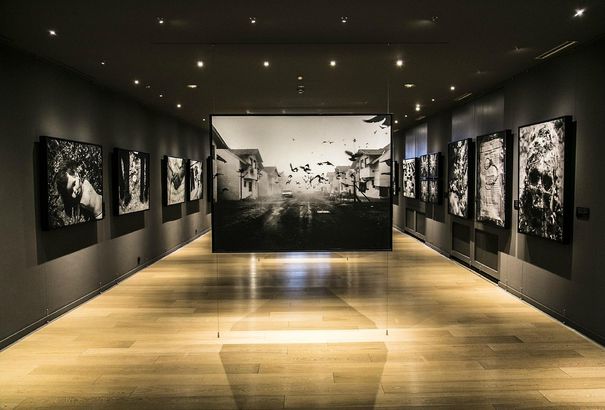
Gallery 11/07/95 is the first memorial museum/gallery in Bosnia and Herzegovina – exhibition space aiming to preserve the memory on Srebrenica tragedy and 8372 persons who tragically lost their lives during the genocide.
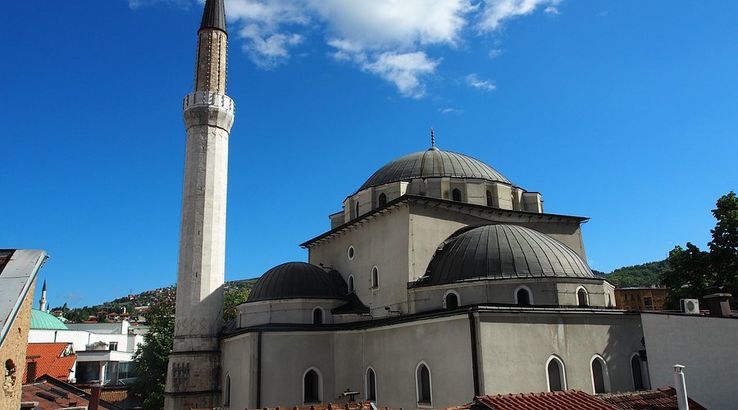
The Gazi Husrev-beg Mosque was completed in the 16th century and features Ottoman architecture. To this day, the mosque remains one of the largest in Bosnia and Herzegovina.
Today the mosque serves as the main congregational mosque of the Islamic Community of Bosnia and Herzegovina, but tourists and guests are welcomed.
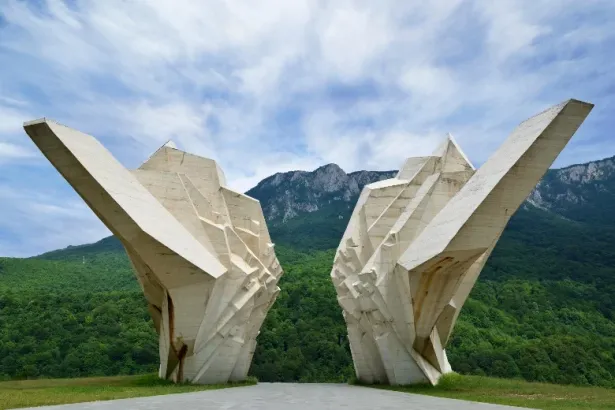
One of the many otherworldly monuments that dot the Bosnian landscape, the rocky passage of the Tjentiste War Memorial is a stunning tribute to a total failure. The two fractal walls of the memorial were erected in the 1970's to remember Operation Fall Schwarz, otherwise known as the Battle of the Sutjeska. The military action took place during World War II and saw Axis forces attempt to rout a group of Yugoslavian forces and capture their leader.
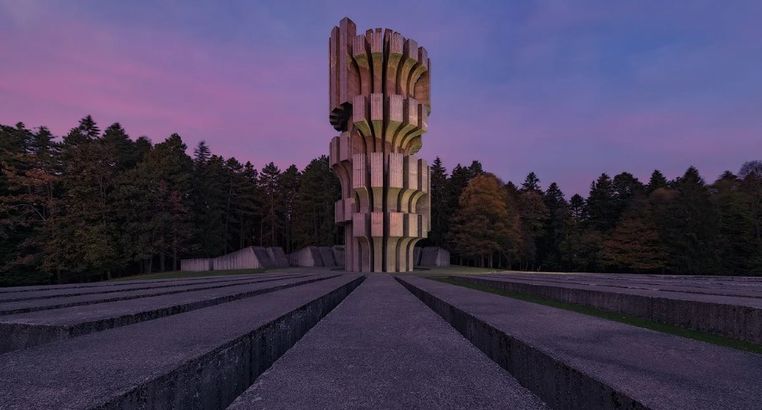
To honor tragic battle, the Kozara Memorial monument was erected in 1972. Designed by Dušan Džamonja, and built atop Mrakovica Mountain on a plateau surrounded by dense forest, the segmented tower stands 33 meters high. To honor the fallen dead, the names of 9921 of the Yugoslav partisans who gave their life for freedom during the World War II offensive are inscribed on a bronze memorial wall near the tower.