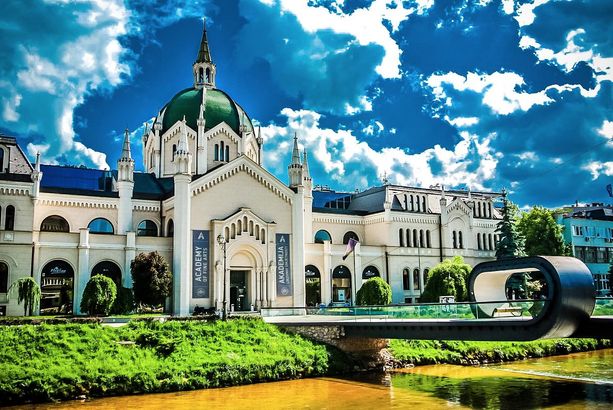
The Academy of Fine Arts in Sarajevo was established in 1972, pursuant to the Law on the Establishment of the Academy, adopted that same year, which defined its principal tasks, primarily those of educating artists sin the domain of fine and visual arts, and organising the teaching process for primary and secondary school teachers of arts.
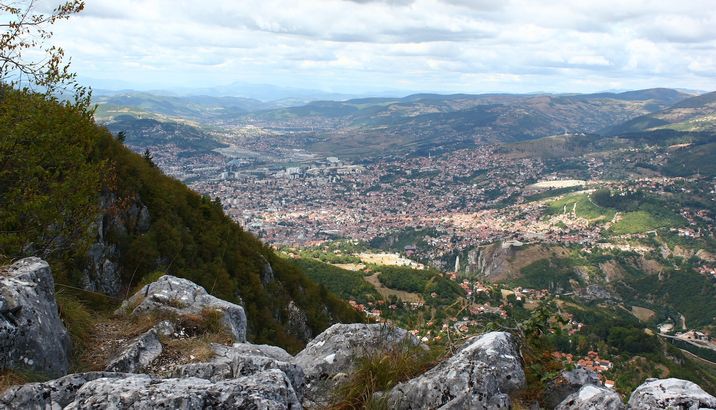
Known as “the lungs of Sarajevo,” Trebević is the closest mountain that is reachable via the cable car from the heart of Stari Grad (Old Town), from the neighborhood of Bistrik.
Walking from the cable summit station (which will soon see the reconstruction of the once-popular restaurant, Vidikovac), either on the road or along the marked mountain paths, will lead you in many different directions where various activities await you.
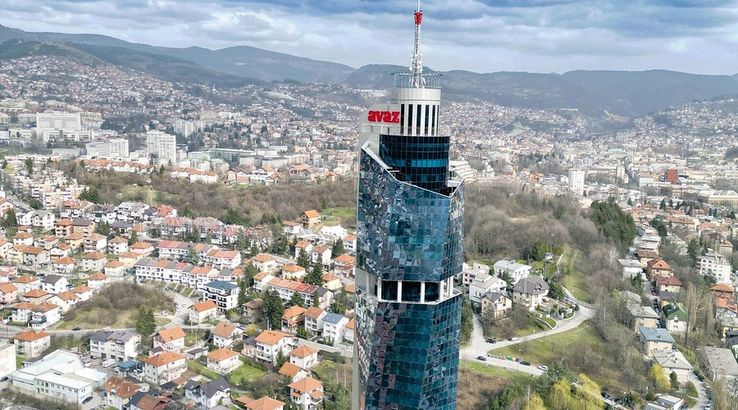
You can see the city from above from the observation deck of the Avaz Twist business center. It is located on the 36th floor of the tower, and a high-speed elevator takes tourists up. On the floor below, there is a cafe with panoramic windows, which also offer excellent panoramic views of Sarajevo.
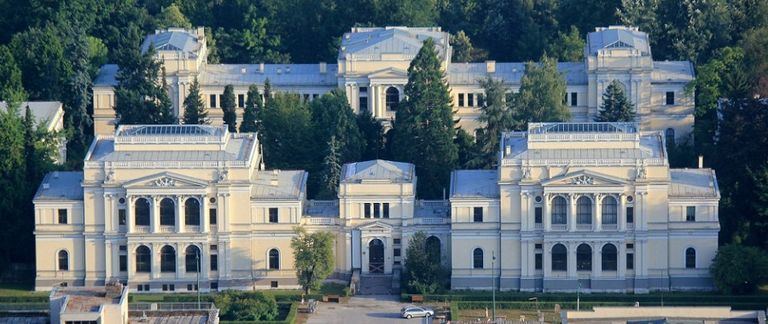
The National Museum of Bosnia and Herzegovina is the most comprehensive collection of artifacts on the history, culture and traditions of the country, and not only its collections but also the museum building itself are noteworthy – a magnificent example of neoclassical architectural style of the early 20th century. Among the pearls of the collection are Illyrian and Roman inscriptions, as well as the well-known Sarajevo Haggadah – a copy of the spiritual book of the Jews from the 14th century.
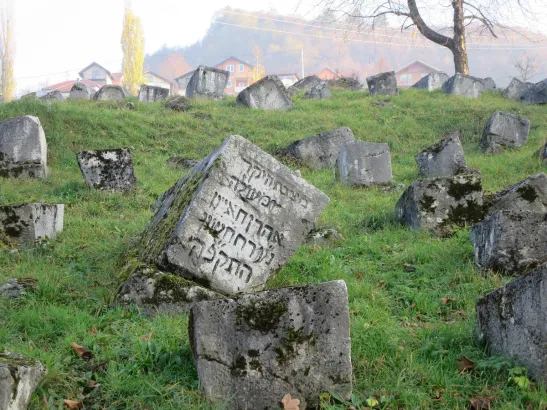
This historic cemetery was inaccessible for several years due to dozens of land mines. английский (определен автоматически)
английский
русский
немецкий
русский
английский
украинский
The graveyard is particularly notable for the unique shape of its tombstones, which bear the influence of the monumental, medieval Bosnian stećci in their block-like shapes and decorative motifs.