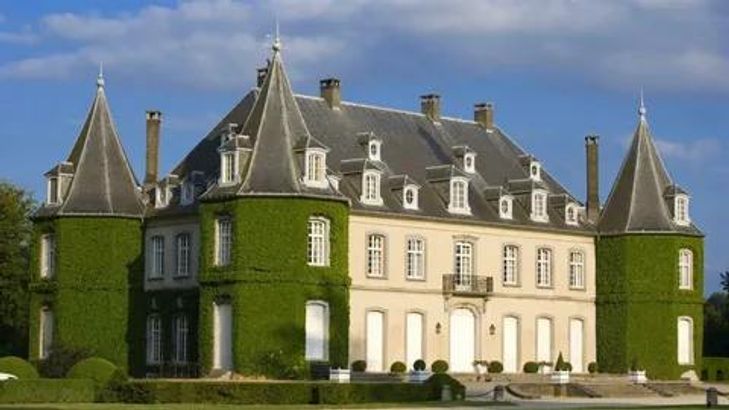
La Hulpe Castle, also known as Solvay Castle, is located on the outskirts of Brussels, and this is another one of my favourite landmarks in Belgium. This beautiful castle was built on the demand of Marquis Maximilien de Béthune in 1842 and later bought and restored by industrial chemist Ernest Solvay.
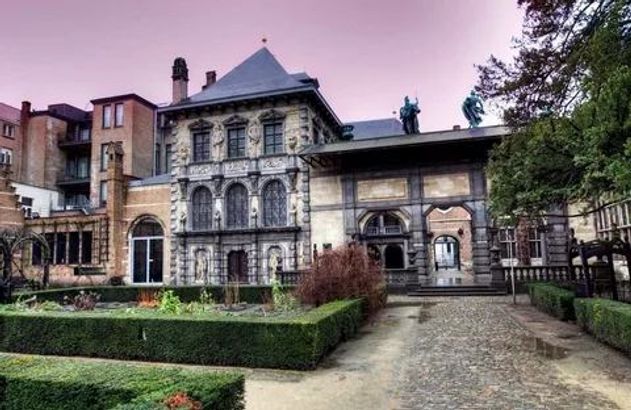
The Rubens House (or Rubenshuis in Dutch) is one of the most important landmarks in Antwerp. It’s here that the world-famous Flemish painter Pieter Paul Rubens (1577-1640) lived and had his workshop. His house was transformed into a museum showcasing many of his paintings. During a visit, you will see where this artist lived and where he painted his masterpieces.

Antwerp’s Central Railway Station is, without a doubt, one of the most beautiful train stations I have ever seen, and it has often been featured on lists containing the most beautiful train stations in the world. This station opened its doors in 1905, and its architecture is amazing. With its beautifully decorated dome and monumental clock, this is one of Belgium’s most beautiful monuments.
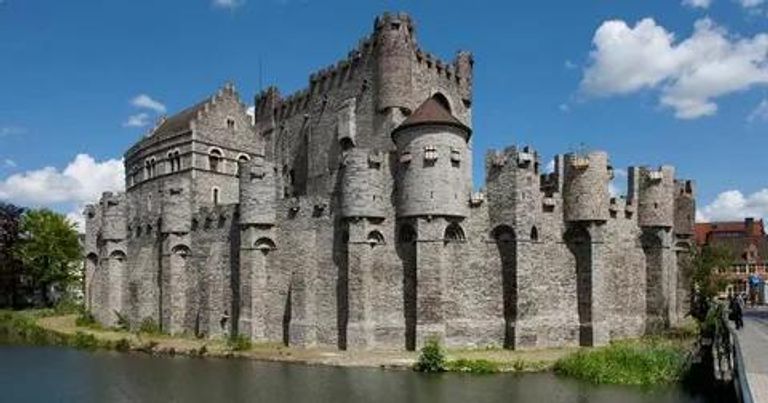
Located in the centre of Ghent, the beautiful Gravensteen Castle (Dutch for “Castle of the Counts”) was the residence of the Counts of Flanders from the 12th to the 14th century. This castle has quite a turbulent history, though. It later served as a courthouse, a prison and a cotton mill.
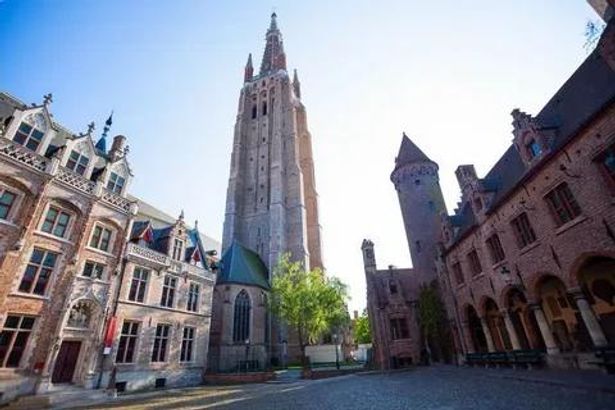
The Church of Our Lady, or Onze-Lieve-Vrouwekerk in Dutch, was built between the 13th and 15th centuries. Its spire is 115,5 m (379 ft) high, which makes it one of the highest brick towers in the world. Inside this church, you will find the world-famous Madonna and Child sculpture by Michelangelo. This is one of the few works of Michelangelo that can be found outside of Italy.
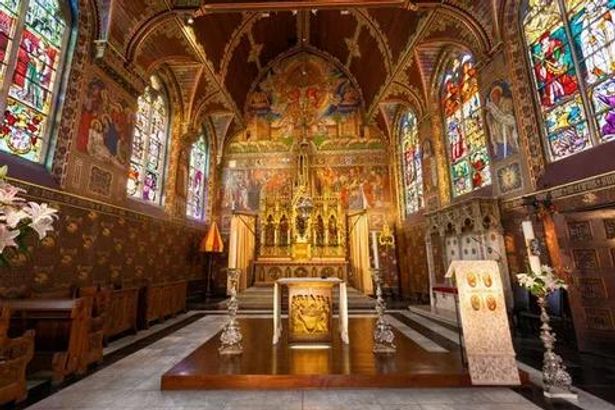
Located on Burg Square, the Basilica of the Holy Blood is a small building that can easily be overlooked. However, this is one of Belgium’s most spectacular churches! This basilica consists of two levels. On the lower level, you will find a Romanesque chapel, and the upper level houses a Gothic chapel.

Constructed in the 13th century, the Belfry of Bruges has been the symbol of Bruges for centuries. This medieval bell tower can be found on Market Square, Bruges’ main square. In the olden days, the Belfry was used as an archive and treasury as well as an observation post to spot fires and other dangers.
That's all